Home/Blog/Tech/Tesla Roadster Demo Showcases SpaceX-Powered Thruster Technology for 'Flying' Car Capabilities
Tesla engineering and major prototypesConfirmed
Tesla Roadster Demo Showcases SpaceX-Powered Thruster Technology for 'Flying' Car Capabilities
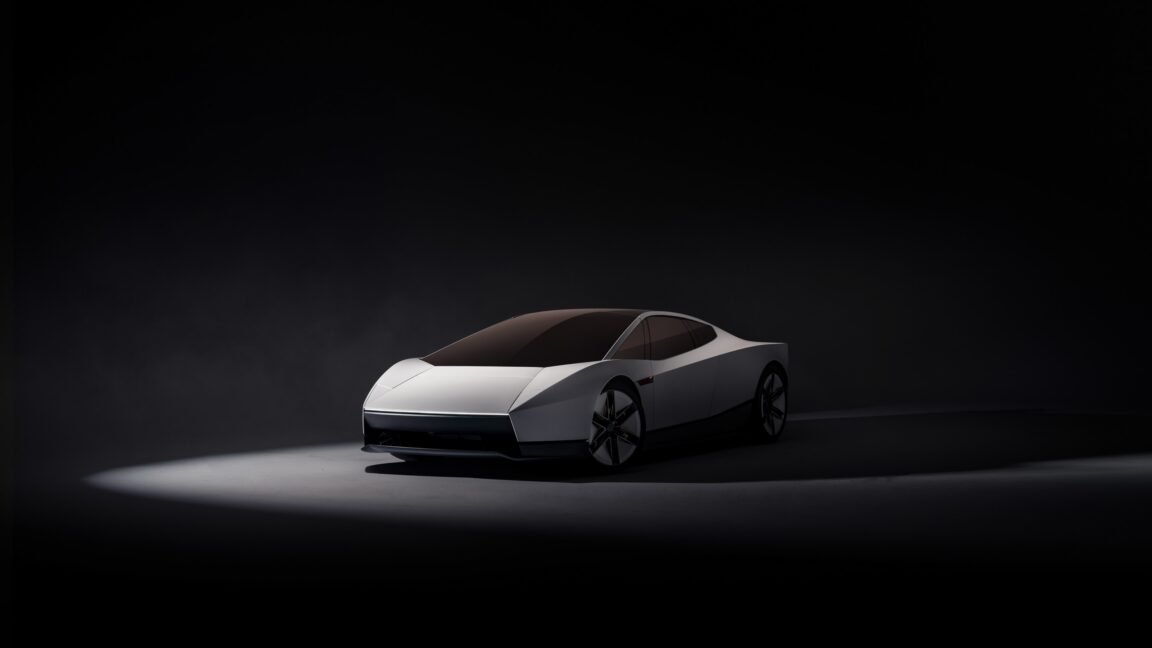
Tesla's latest Roadster demonstration highlights the integration of SpaceX-derived thruster technology, enabling the car to perform aerial maneuvers. This showcases advanced engineering in propulsion and vehicle control, hinting at future possibilities for automotive design and performance.
Published October 17, 20263 min readTesla engineering and major prototypes
On October 15, 2026, Tesla publicly demonstrated a prototype of its Roadster vehicle.
This prototype incorporates what Tesla describes as "SpaceX-powered thruster technology."
The thruster system operates using "compressed gas."
During the demonstration, the Roadster prototype performed various maneuvers, including "leaping over other Tesla vehicles."
The underlying principles of this thruster technology are comparable to those found in "50-year-old stunt technology."
Technical analysis
The confirmed use of "compressed gas" for the "SpaceX-powered thruster technology" indicates a system that stores gas under high pressure and releases it through precisely controlled valves and nozzles to generate thrust. This mechanism is distinct from combustion-based rocket engines, relying instead on the kinetic energy of the expelled gas. The "SpaceX-powered" designation suggests the application of aerospace engineering principles, potentially involving high-performance, rapid-acting valves, robust pressure vessels, and advanced plumbing systems. These components would likely be designed for extreme reliability and rapid response, drawing from SpaceX's experience with spacecraft attitude control thrusters or cold-gas systems. The finite nature of compressed gas implies a limited number of uses or a need for an onboard or external refill mechanism, details of which were not disclosed.
The ability of the Roadster to perform controlled "leaping" and other "maneuvers" directly implies the presence of a highly sophisticated, real-time control system. This system must precisely manage the timing, duration, and potentially the vectoring of thrust from multiple thrusters to achieve desired vehicle movements while maintaining stability. Such a system necessitates complex software for several critical functions. It must integrate and fuse data from various sensors, including accelerometers, gyroscopes, and potentially ranging sensors (e.g., lidar or radar) for precise altitude and position awareness. The software must interpret driver inputs (or autonomous commands), calculate the required thrust profiles to achieve the desired maneuver, and actuate the thruster valves with high fidelity and minimal latency. This represents a significant expansion of traditional automotive control software, which primarily manages wheel torque, braking, and steering.
Furthermore, the software must dynamically account for the vehicle's changing mass distribution as gas is expended and manage the intricate interaction between thruster forces and conventional vehicle dynamics (suspension, tire grip, aerodynamic forces) to ensure stability during transitions, especially during landing. The development of robust control algorithms, state estimation, and fault-tolerant software architecture would be paramount. The system would require continuous monitoring and adaptive control to compensate for environmental factors and vehicle state changes, demanding high computational power and efficient code execution.
Integrating a high-pressure gas thruster system into a road-legal vehicle presents several complex engineering challenges that extend beyond the propulsion system itself. The vehicle's chassis and mounting points must be engineered to withstand the significant and localized forces generated by the thrusters, particularly during rapid vertical movements or rotational maneuvers. The physical integration of high-pressure gas tanks, valves, and plumbing within the existing vehicle architecture requires careful consideration of space, weight distribution, and crashworthiness. Managing high-pressure gas and rapid thrust capabilities in a vehicle intended for public roads introduces new safety considerations. This necessitates advanced safety protocols, both in hardware design (e.g., pressure relief valves, redundant control systems, impact-resistant tank enclosures) and in software (e.g., fault detection, safe shutdown procedures, prevention of unintended activation, and diagnostic monitoring). The regulatory landscape for such a system in consumer vehicles is also an unexplored area, as details on compliance were not disclosed.
The demonstration showcases a novel approach to enhancing vehicle performance and control beyond conventional means. While the "leaping" capability is a dramatic demonstration, the underlying thruster technology and its advanced control systems could potentially be applied to improve aspects like emergency braking (by generating downward force), evasive maneuvers (by enabling rapid lateral shifts), or even active aerodynamic control by generating localized forces to influence airflow. The integration of aerospace-derived propulsion into an automotive platform pushes the boundaries of vehicle design and control system complexity, potentially paving the way for new paradigms in ground vehicle dynamics and safety systems.
 Tesla engineering and major prototypesConfirmed